
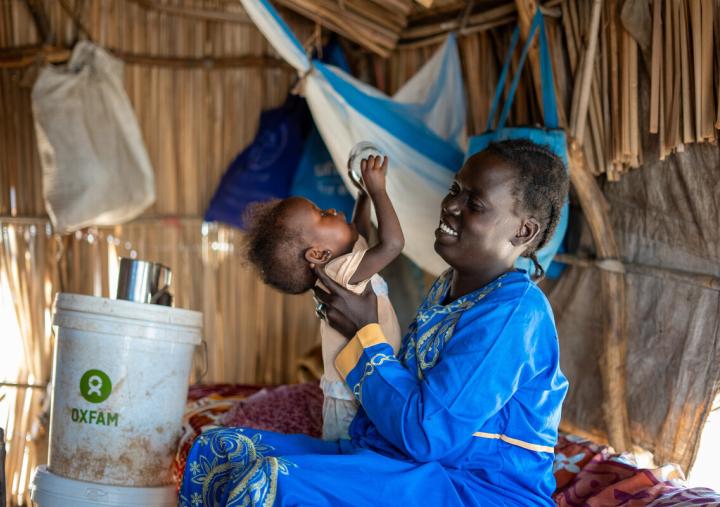
Ruth, recently arrived in Akobo after conflict came to her town, is one of the 10,000 internally displaced people to receive food from an Oxfam distribution. Photo: Tim Bierley/Oxfam
South Sudan is in the midst of a catastrophic humanitarian crisis driven by ethnic conflict and climate. More than half of the population is facing extreme hunger and are in need of urgent aid. Help us provide food, water and sanitation now.
A disaster caused by conflict and climate
South Sudan is highly vulnerable to the impacts of climate change and natural disasters, including severe droughts and deadly floods. The combined effects of conflict and climate change have left communities struggling to survive. Reduced attention and funding to the country is further deepening the humanitarian crisis and putting millions of lives at immediate risk.
Nearly two years since the Sudan conflict in April 2023, over 1 million refugees and returnees have fled Sudan to seek refuge in South Sudan straining scarce resources. The scale of the crisis is staggering. Every day, more than 1,500 people arrive at transit centers in Renk, which operate at five times their intended capacity.
“I have seen a lot in the past seven years in South Sudan, and things are getting worse. Our major concern now is gaining access to locations where people need our help. In some areas, we even have to swim to reach them.”
Holding on to hope
“I get a monthly cash assistance, buckets, dignity kits, soap from Oxfam which has continued to help me since my arrival but with a family of six, I would want to do more to feed my children.”
Ayul Ajak, a visually impaired mother of six, refugee in South Sudan
One of the world’s worst food crises
The conflict has pushed the country into an economic free-fall with food and fuel prices skyrocketing and an ever-rising cost of living. Trade and local markets have been disrupted, and food stock has depleted.
As people are forced from their homes, they lose their possessions, crops and income, and often get stranded in places where there aren’t enough facilities to support tens of thousands of new arrivals.
Harvests in late 2017 were poor or non-existent for many, this is an extremely worrying sign for the long dry months ahead. Over 7.1 million people – half the country’s population - are facing extreme and deadly hunger. While the war continues the situation can only get worse.

Cash payments stabilize refugee life
“The most challenging thing here is lack of food. When Oxfam helped me, I stopped going to the forest and started a small business to support myself with the cash assistance I received. My children have never gone hungry.”
Shaima Ali, a refugee from Sudan
Oxfam’s response
Oxfam is working in South Sudan to deliver timely and effective humanitarian aid to help people affected by the conflict. Oxfam is currently supporting over 500,000 people with humanitarian assistance including clean water, hygiene facilities, food, fuel, income and longer-term support.
In Renk town, located at the border between South Sudan and Sudan, Oxfam has been operating since the start of the Sudan war in April 2023 responding to the refugee crisis regionally.
Our activities include:
- Installing emergency drinking water systems, toilets, and bathing facilities to provide immediate relief.
- Distributing hygiene and dignity kits containing essential items like soap, detergent for washing clothes, toothbrushes, toothpaste, as well as underwear, menstrual items, and solar-powered flashlights for women.
Promoting good hygiene practices to prevent water-borne diseases like cholera, which pose significant health risks in the affected areas.
By the end of 2024, Oxfam has assisted more than 140,000 people crossing the border from South Sudan and seeking refuge in South Sudan. To help improve security for women, Oxfam is providing cash – so far, Oxfam has distributed multi-purpose cash assistance to 32,247 people in this area of South Sudan.

Surviving and healing from loss
“Life is not easy here, but it’s safer. We have toilets and bathrooms, and I get a bit of cash support from Oxfam where I’m able to buy some food for my son."
Nadia Zahad, a refugee from the Sudan war
You can help
Every day that the conflict continues, South Sudanese people face a threat to their lives.
This is a human-made tragedy, and we are running out of time to stop it from getting worse.