
Damaris Lesiamito and her grandchild have a light moment at their home in Maralal. (Photo: James Ekwam/Oxfam)
Towards a rights-respecting digital ecosystem for all
Digital technologies must work for everyone
Oxfam envisions a positive digital future: a vibrant, creative, dynamic, and innovative ecosystem that is safe, secure, and built on a foundation of trust and human rights, where people of all backgrounds, ages, abilities, and genders can engage in digital spaces and use technology confidently; that respects and protects the rights of all people, whether they use technology or not.
In its 2018 declaration, “The promotion, protection and enjoyment of human rights on the Internet,” the United Nations affirmed that“the same rights people have offline must also be protected online.”

Jacquline is a graduate of Youth Challenge Vanuatu's (YCV) Ready for Work program, and now works at the ombudsman office in Vanuatu. Oxfam acknowledges the support of the Australian Government through the Australian NGO Cooperation Program. (Photo: Arlene Bax/Oxfam)
These rights naturally include freedom of expression, freedom of association, privacy, bodily autonomy, physical and psychological safety, and other commonly understood rights. They might also include the right to access digital tools, systems, and networks; the right to transparency, and timely, objective, and accurate information; the right to meaningful employment; the right to organize and protest policies that might threaten or undermine these rights; and the right to responsible and accountable representation in governments and international institutions that advocate for and protect the interests of everyday people.
For many, the inequalities and harms experienced in their physical lives are sometimes replicated – or made worse – in online spaces, as well as through the various other ways digital technologies have become commonplace in today’s world. The rapid rise of artificial intelligence (AI) – a technology everyday people are only beginning to use, much less understand – increases the urgency with which human rights in a digital age must be prioritized.
Beyond the many challenging questions raised by AI, the vision for an optimistic future where technology serves humanity and addresses chronic systemic problems is further jeopardized by cybercrime, surveillance, the monetization of personal data, a constant battle for attention, and an unstable, rapidly changing digital economy that is fundamentally altering the workplace and livelihoods across the social spectrum. Governments and institutions are increasingly compromised by conflicts of interest and the growing corporate influence over policymaking.
And that’s just for the five and a half billion people online today. More than two billion people still lack meaningful access to the tools, technology, and resources of the digital age, and are at risk of falling further behind as a result.
For women, girls, elders, and marginalized groups like LGBTQIA+ people, people with disability, and racial, ethnic, and religious minorities, the risks – as well as the opportunities – are often greater.
| 5.56 billion | 67.9% of the world’s population is connected to the internet |
| 5.78 billion | 70.5% of the world’s population has a mobile phone |
| 5.24 billion | 63.9% of the world’s population uses social media |
Source: We are Social: Digital in 2025 (https://wearesocial.com/uk/blog/2025/02/digital-2025-the-essential-guide-to-the-global-state-of-digital/)
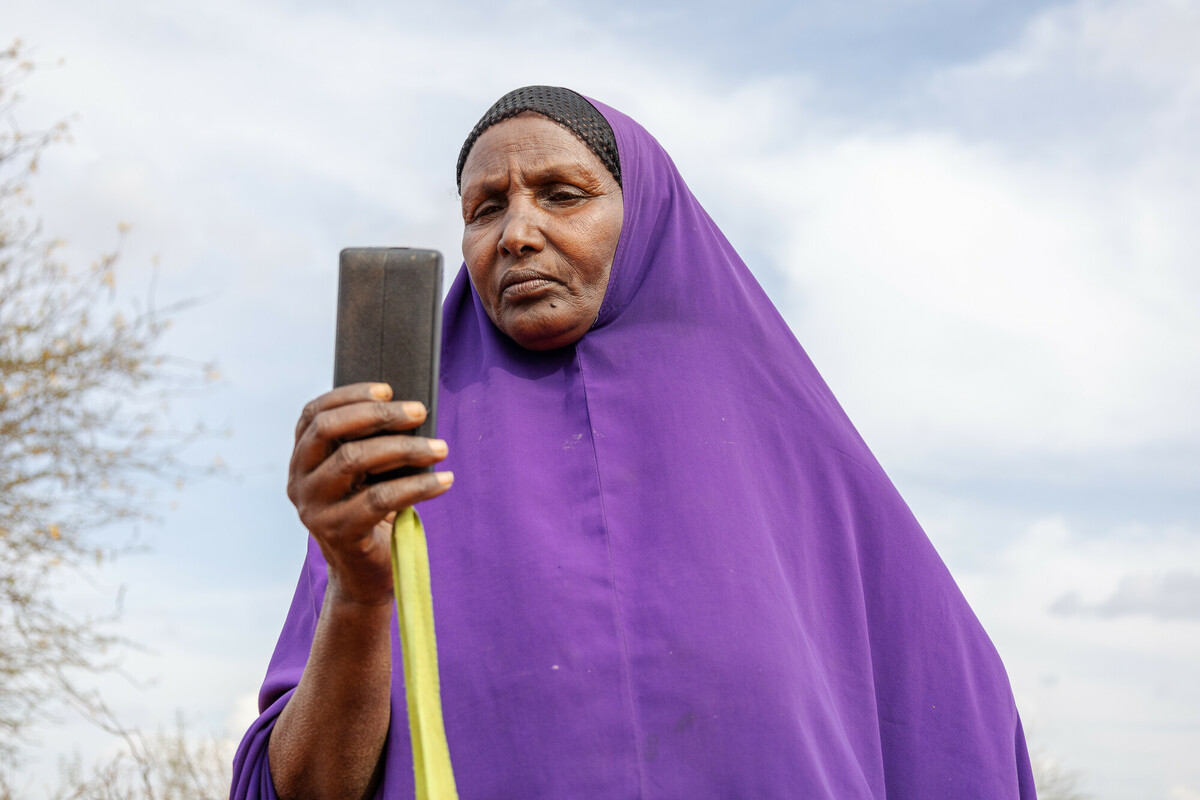
Ebla Hussein Ahmed reading a message from her mobile phone at her home in Elben, Wajir County, Kenya. She receives her monthly cash payment notification via her phone. (Photo: Billy Owiti/Oxfam)
Today’s status quo is not sustainable
In the last three decades, digital technologies have transformed culture, media, work, education, healthcare, politics, and more. Every part of human society has been affected. And while this revolution has brought a new age of innovation, creativity, and economic opportunity, it has also – by almost any measure – contributed to deepening inequality. But how?
First, the profound economic growth, influence, and power enabled by digital technologies have accrued unevenly in favor of wealthy industrialized countries, where the internet and its offspring – e-commerce, social media, smartphones, and now artificial intelligence – originated. This head start advantage led to an uneven distribution of the fruits of digital transformation, and countries that were already economically advanced became even more so, while much of the rest of the world struggled to catch up. Even as countries across the Global South, such as Kenya, India, and Brazil, are becoming technology leaders in their respective regions, the fundamental systemic inequities remain.
- Second, the ongoing consolidation of the technology industry into a few dominant players has created a global tech oligopoly. This concentration of wealth and influence threatens to undermine democracy, global governance, and human rights in favor of profit and raw, unchecked political power.
Instead of a more cohesive global approach to digital technologies and human rights, the world is quickly fragmenting into a multi-polar landscape with vastly different concepts of the appropriate role technology should play in everyday life and to what extent human rights are even a consideration.
Indeed, these changes are already being witnessed as "Big Tech" increasingly aligns with extremist anti-rights political movements. The very technology that once promised liberation is instead being turned against everyday people in the interests of manipulation, control, and a dangerous conflation of profit seeking and political expediency without regard for human rights.
As a new era of AI dawns, the lessons learned so far – including exploitation of human rights as a profit-generating business model – threaten to become further entrenched as these same forces aim to dominate and control this potentially world-changing technology.

Computer classes at Northern Care Youth Centre, a branch of Oxfam local partner Wan Smol Bag on the island of Santo. It is a hub of activity providing skills training, health outreach, sports facilities and safe spaces for community youth. Oxfam acknowledges the support of the Australian Government through the Australian NGO Cooperation Program. (Photo: Arlene Bax/Oxfam)
AI and the challenging road ahead
Artificial Intelligence (AI) is rapidly transforming the ways we work, learn, live, and create – even distorting our perceptions of reality and objective facts. And although AI holds great promise for many aspects of human life – including our mission to fight poverty and inequality – it also comes with great risk.
Change is happening at break-neck speed. The combination of private sector accelerationism and low regulatory oversight or capacity – as well as limited accountability for harms done – has placed civil society (community organizations, human rights defenders, international institutions, and lawmakers) at a disadvantage for addressing the human rights consequences of this powerful technology in a timely way.
- The aforementioned concentration of power and wealth among a few multinational corporations and private equity firms represents a major challenge for advocates of rights in a digital age and the age of AI. This powerful elite exert significant influence over economies, political processes, policies, and laws without sufficient human rights due diligence to understand the potential harms and other impacts their technologies might have. This has further hampered civil society’s efforts to advocate for common-sense, rights-respecting laws and regulations.
Despite these considerable obstacles and setbacks, civil society continues to seek consensus on our shared digital future. In 2024, the United Nations members states ratified – by a large majority – the first Global Digital Compact – a comprehensive global framework for digital cooperation and governance of artificial intelligence. Its top-line aims are to:
- Close all digital divides and deliver an inclusive digital economy
- Build an open, safe, and secure digital space
- Strengthen international data governance and govern AI for humanity
Though we do not believe the Compact goes far enough in its efforts to protect rights and ensure a more rights-respecting digital ecosystem, Oxfam and our partners will be working together to assess the progress of the Compact’s implementation and seek accountability for member states’ commitments.
What You Can Do
While the status quo may seem daunting, the power of people to organize, advocate, and pressure governments and private sector actors remains one of our most potent tools for holding the powerful to account.
There is strength in numbers. Oxfam and civil society organizations throughout the world need your voice and your influence to demand that technology be used in the service of human rights and social good first and foremost, and that profit not be prioritized over the wellbeing of everyday people.
Oxfam is already engaging in this effort through our multi-year program, “Recentering the Civic Internet through Partner Engagement” – or ReCIPE. This program aims to cultivate a rights-respecting digital ecosystem that is values-based, human-centric and safe for civil society actors and human rights defenders. The project rests upon three main pillars that complement each other to help bring about the desired change.