
Climate disasters don’t affect everyone equally. The super-rich are responsible for a disproportionate share of carbon emissions while the rest of the world faces the worst consequences. As people struggle to recover from floods, fires and rising food prices, the super-rich can protect themselves and even profit from the crisis.
Oxfam’s new report, Disaster Divide, reveals how the emissions of the richest polluters fuel climate chaos, how inequality makes disasters more deadly, and how some of the wealthiest still profit while others struggle to rebuild their lives.
The Super-Rich are Fueling Climate Chaos
Billionaires and the super-rich are burning carbon at an extraordinary rate. The richest 0.1% of the world's population, around 8 million people, have more emissions than the bottom 3.5 billion.
The carbon pollution of the richest 1% is directly contributing to increased climate disasters, including floods, fires, droughts and food crises. Their yearly emissions are estimated to cause 1.9 million excess deaths from heat.
Those who contribute most to the climate crisis must take responsibility for the damage their emissions cause.
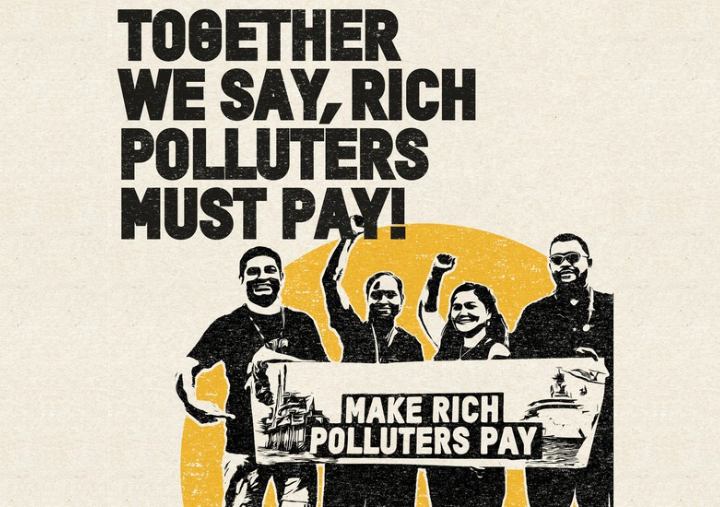
Make Rich Polluters Pay
The crisis isn’t an accident. It’s the result of a system that puts profits over people and the planet. A fairer, more sustainable future is possible—but only if we make rich polluters pay.
Climate Chaos Hits Hardest at the Sharp End of Inequality
Inequality doesn’t just shape who suffers when disasters strike. It can make disasters far more deadly. Oxfam’s research finds that deaths from flooding are seven times higher in more unequal countries.
When extreme weather hits, wealth and resources can make the difference between being able to protect yourself and being left exposed. While the wealthy can afford insurance or move somewhere safer, others lose their homes and livelihoods, struggle to feed their families, and face a long road to rebuild and recover.
The Richest Profit While Others Struggle to Recover
For many people, a climate disaster is followed by months or years of trying to rebuild their lives. Successive climate shocks leave people more exposed and vulnerable, with fewer savings to fall back on.
Meanwhile, Oxfam's new research shows how the super-rich can cash in on climate pain, making huge profits from soaring food prices and disasters.
This is the Disaster Divide: those with the least resources are left to bear the heaviest consequences, while the wealthiest can protect their assets and, in some cases, profit from the crisis.

Fires, Floods, Famines, and the Super-Rich
Climate breakdown is happening now. The weather is changing everywhere. More extreme heat – 40-degree, 50-degree days. More storms. More floods. More wildfires. Less food to harvest, which means less to eat, higher food bills, and more people going hungry.
With new data, Oxfam can, for the first time, connect the emissions of the super-rich to these extreme weather events.
A Fairer Future is Possible
This vicious circle is not inevitable. We can reduce the human harm caused by climate breakdown by cutting the emissions of the richest people, radically reducing inequality and ensuring that climate adaptation has equality at its center.
That means tackling the inequalities that leave people exposed to disaster, strengthening the systems people depend on, and ensuring that those most responsible for climate pollution pay their fair share.
Recovery should not depend on wealth or power. A fairer, more sustainable future is possible, but it requires action to put people and the planet before profit.
A More Equal World
Creating a more equal world would enable emissions to fall rapidly, food systems to become fairer and more resilient, and public systems to protect people from crisis and adapt to the effects of climate change.
