
Maksuda Parvin, entrepreneur, at Women in Digital training session with Touhida Akter Songita, a digital marketer, and Jahanara Akter, web developer. All three women have received training at Women in Digital - which has given them confidence and vital tech and storytelling knowledge. (Photo: Mutasim Billah/Oxfam)
What are some ways technology can enhance and improve human rights?
Affordable tools are becoming available to the world’s poorest communities, connecting them to the global network
This evolution is happening just as the integration of technology into the daily lives, work, and civic activities of people worldwide is expanding our collective reliance on these systems and platforms.
Global digital transformation still has the potential to make fundamental, far-reaching changes marginalized communities desperately need
Digital connections can unite people to fight inequality and hold leaders accountable. In this respect the digital revolution and the growth of cities have become complementary forces that have led to a new generation of youth activists across the world. Beyond economic inequality, these tools can be potent ingredients for the emancipation of women and other traditionally marginalized or threatened social groups.
Digital empowers social movements in ways that force society to recognize those whom it would prefer to exploit, oppress, or ignore
Movements like #MeToo and 'Ni una menos' ('Not one less') have mobilized women and their allies to fight back against harassment and violence online and offline. Similarly, the Black Lives Matter movement has forced Americans and others around the world to grapple with centuries of systemic racism and white supremacy that are the legacy of European colonialism and the transatlantic slave trade. And people with disabilities have been able to organize advocate for a more inclusive and anti-ableist digital ecosystem.
The Covid-19 global pandemic showed just how important technology is for society when physical contact and mobility must be minimized – and has thrown inequality and the need for stronger governance into stark relief
The need for timely, accurate information can mean the difference between life and death; and adequate, anti-ableist digital access and social safety nets can mean the difference between employment or unemployment. These lessons show the critical importance of addressing the barriers to access to technology, but don’t address the other inequalities the pandemic laid bare, such as the relative security of some types of employment versus others (e.g., the so-called 'gig economy'), and how the difference often follows other inequalities related to race, gender, income, social class, ability, and other characteristics.
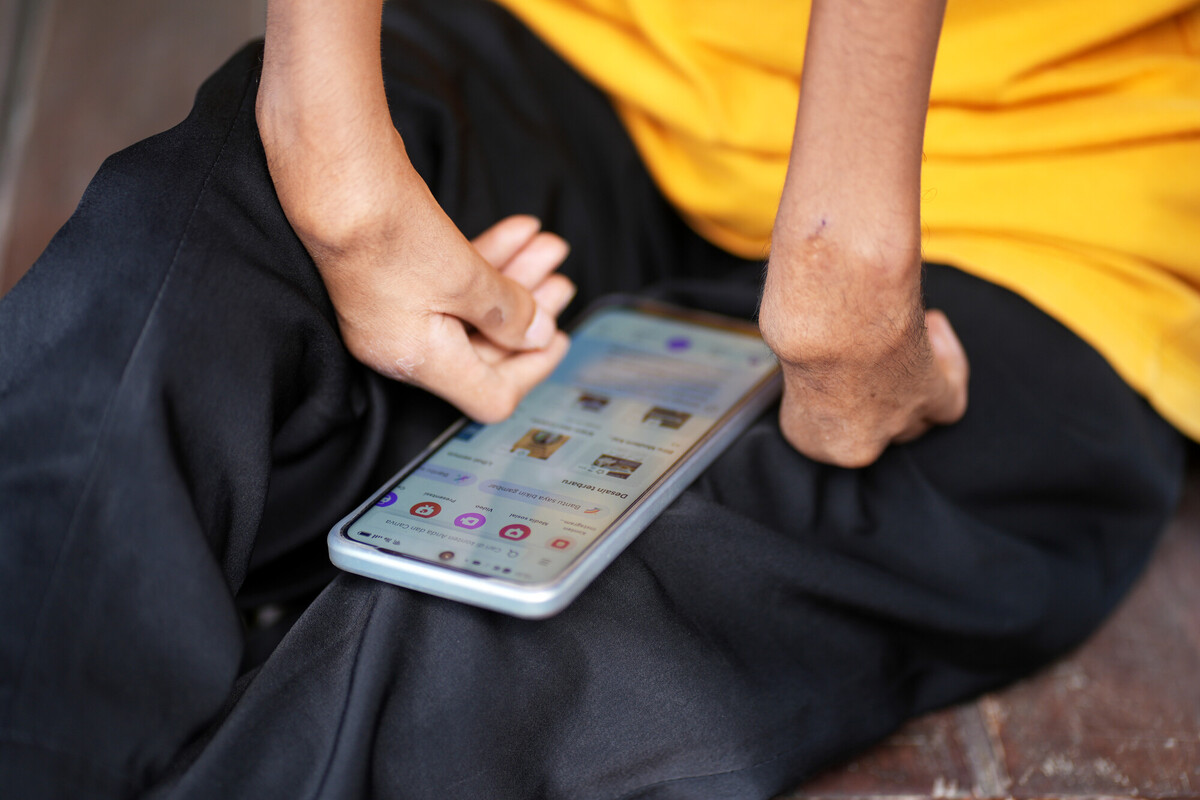
Mohidin is part of the I CAN ACT response in his village. He keeps others informed through updating the local Village Disaster Preparedness Team social media channel. Oxfam acknowledges the support of the Australian Government through the Australian NGO Cooperation Program. (Photo: Aimee Han/Oxfam)
Our Key Approaches
Expanding and leveraging digital spaces
We will champion the potential they offer to social justice activists and will advocate for safe, equitable and inclusive access to the internet as a public good to reduce digital inequality and its impact on people experiencing poverty and injustice.
Working with young and feminist digital activists
We will amplify their voices to enable their influence and stand with them against sexist backlash and abuse.
Contributing to the creation and enforcement of effective internet governance rules
We will engage with progressive technology actors in the public and private sectors on digital rights and ethics and promote safe access to digital technology for all. (Oxfam's engagement in the process of drafting the Global Digital Compact is one such example.)
Engaging strategically with the private sector
We will apply our decades of experience working with corporations to advocate for the adoption of rights-respecting policies and practices (including through meaningful and robust Human Rights Due Diligence, or HRDD) to promote rights-respecting design, development, deployment and use of technology. This includes advocating publicly for change when and where we believe it's needed.
Addressing the ways technology impacts inequality in all our work
Across the spectrum of Oxfam's core issues, we will surface and address the ways technology plays a role, from the extraction of strategic mineral resources to technology-facilitated gender-based violence to the growing demands for energy-intensive computing power threatens precious natural resources like fresh water and undermines progress against climate change.
Ensuring we ourselves ‘do no harm’ in the development of digital products and tools
We will design these solutions with and for those whom we serve, honoring representation, inclusion, transparency, and diversity.

Yati produces many kinds of snacks with her group in her village. Oxfam local partner Adara guided them to start a new production using local resources. They now make crackers using food grade ingredients, and make sales online and offline. Oxfam acknowledges the support of the Australian Government through the Australian NGO Cooperation Program. (Photo: M. Nugie and Andito Wasi/Oxfam)
Our Pillars
Oxfam’s approach to Rights in a Digital Age is organized across five key pillars.
The right to safe, secure, and equitable access; knowledge, and use of digital tools, resources, systems, and platforms, taking particular care to ensure that the rights of minors, women, elders, people with disabilities, and other traditionally marginalized and oppressed groups in the global majority are prioritized. We emphasize the "Six A's of Access": Availability, Affordability, Awareness, Accessibility, and Ability, and Architecture.
The right to safely and securely use digital tools, spaces, platforms, and systems to express authentic social and political views and safely share information in ways that expand and strengthen democracy and social justice, free from mis- and disinformation, surveillance, and other forms of intimidations, especially for civil society organizations, the press, and human rights defenders; to engage with others to organize and participate in shared communities and social movements; and to do so free from undue interference or violence, particularly gender-based violence, not only or necessarily exclusively to those engaging in online spaces or movements.
The fundamental right to privacy for all people, and to have a voice and a choice in which personal and private information, including biometric data, is collected, shared, transmitted, and stored electronically, with particular care for the ways age (particularly with regard to minors), gender, race, ability, socioeconomic class, and other factors bias system design and user experiences; and how private data is used, including all forms of state and non-state digital surveillance and algorithms that impact digital experiences and physical and psychological safety.
The right to have a voice in the ways artificial intelligence (AI) and other forms of algorithmic automation impact daily life and the ability to fully exercise rights, including meaningful, rights-respecting regulations that address encoded biases in algorithmic and AI-driven decision-making, content searching, or other machine learning-based paradigms, including, but not limited to, decisions related to employment, such as applicant screening, hiring practices, and employee surveillance in and out of the workplace; access to meaningful livelihoods and economic opportunities in a digital age, where many tasks and traditional forms of labor are becoming automated, either through robotics or algorithmically powered AI; access to affordable and adequate education and training to acquire relevant new skills; and equitable pro-worker and care-centered social policies that provide for the impacts of a rapidly changing employment landscape.
The right to sensible, meaningful, transparent, and above all enforced regulations, laws, treaties, and private sector policies and guarantees – domestic, international, multilateral, and multi-stakeholder in scope – that protect and expand their rights as enumerated in the other four pillars, informed by, and secured through, transparent democratic processes, including transparent systems for accountability and redress of harm.